What Motorcycle Laws Apply in Mississippi?
Mississippi law requires motorcycle operators to hold a Class R motorcycle endorsement, wear eye protection, and follow all standard traffic laws that apply to other motor vehicles. Riders under 18 must wear a DOT-approved helmet, though adult riders over 18 face no helmet requirement.
Understanding motorcycle safety awareness and laws in Mississippi matters because these rules directly affect both crash prevention and how liability is determined after a collision.
Motorcycle safety awareness and laws affect every rider and driver on Mississippi roads. Knowing the legal requirements, common crash patterns, and how fault works after a collision helps riders protect themselves and helps drivers share the road more safely.
Mississippi treats motorcycles as full vehicles under state traffic law, but riders face risks that other drivers do not. Visibility challenges, road surface hazards, and bias from insurance adjusters all create complications that go beyond standard traffic safety. An experienced motorcycle accident lawyer can help injured riders protect their rights and pursue fair compensation after a crash.
The legal rules that apply before and after a crash shape how injury claims develop and what compensation may be available.
Key Takeaways for Motorcycle Safety Awareness and Laws
- Mississippi law requires riders under 18 to wear DOT-approved helmets, but adult riders over 18 may legally ride without one, and helmet use still affects how insurers evaluate injury claims.
- Mississippi follows a pure comparative fault system, meaning a rider found partially at fault may still recover compensation reduced by their share of responsibility.
- Left-turn collisions and lane-change crashes account for a large share of motorcycle accidents, often caused by drivers who fail to check blind spots before turning or merging.
- Safety violations like speeding or running a red light may be used as evidence of negligence in an injury claim, even if the violation did not directly cause the motorcycle crash.
- Rural highways in Northeast Mississippi, including Highway 45 and the I-22 corridor, present unique risks for riders due to higher speeds, limited lighting, and heavy commercial truck traffic.
What Are Mississippi’s Motorcycle Safety Laws?
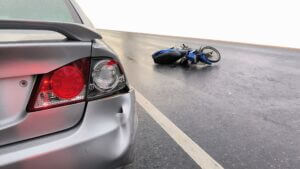 Mississippi motorcycle laws cover licensing, helmet requirements, eye protection, and equipment standards. These rules apply statewide and affect both daily riding decisions and how fault is evaluated after a motorcycle crash.
What Helmet and Eye Protection Rules Apply to Mississippi Riders?
Mississippi requires all motorcycle riders under 18 to wear a DOT-approved helmet under Miss. Code § 63-7-64. Riders 18 and older may legally ride without a helmet. All riders, regardless of age, must wear eye protection unless the motorcycle has a windscreen.
| Mississippi Motorcycle Law | What the Rule Requires | Why It Matters After a Crash |
| Helmet law (§ 63-7-64) | Riders under 18 must wear DOT helmets | Insurers may argue that helmet absence increased injuries |
| Eye protection | Required for all riders without a windscreen | Failure to comply may support negligence arguments |
| Licensing | Class R endorsement required | Riding without endorsement affects liability assessment |
| Equipment standards | Headlights, taillights, mirrors required | Equipment violations may be cited as contributing factors |
| Lane use | One motorcycle per lane; no lane splitting | Lane-position violations affect fault determinations |
What Licensing Requirements Apply to Motorcycle Riders?
Mississippi requires a Class R motorcycle endorsement on the rider’s driver’s license. Obtaining this endorsement involves passing both a written knowledge test and a riding skills test through the Mississippi Department of Public Safety.
Riding without a valid endorsement creates legal exposure beyond a traffic citation. In an injury claim, the lack of proper licensing may be used to argue that the rider lacked the training needed to operate safely. This argument affects fault percentages under Mississippi’s comparative fault system.
Why Are Motorcycle Riders Harder for Drivers to See?
Motorcycles occupy a smaller visual profile than cars and trucks, making them easier to overlook in mirrors, at intersections, and during lane changes. This visibility gap is the single largest contributing factor in multi-vehicle motorcycle crashes.
How Do Blind Spots and Intersections Create Danger?
Intersection crashes happen when drivers making left turns fail to see oncoming motorcycles or misjudge their speed. A motorcycle’s narrow profile fits inside the blind spots of most passenger vehicles, SUVs, and commercial trucks.
Lane-change collisions follow a similar pattern. A driver checks mirrors, sees no vehicle, and merges into a lane already occupied by a motorcycle. Along high-traffic corridors like Highway 45 through Lee County and the I-22 stretch near Tupelo, merging commercial trucks create additional blind-spot risks for riders.
What Makes Rural Mississippi Roads Especially Risky for Riders?
Rural highways in Northeast Mississippi present hazards that urban roads do not. Limited lighting, unpaved shoulders, agricultural equipment, and logging trucks all increase risk for motorcycle riders.
Several road conditions on rural Mississippi highways create elevated danger for riders. Recognizing these hazards helps both riders and drivers reduce crash risk:
- Gravel or debris on road surfaces near farm access points and unpaved county road intersections
- Limited or absent road lighting on stretches of Highway 45 and rural Prentiss County routes
- Slow-moving agricultural and logging vehicles that create sudden speed differentials
- Narrow lanes without adequate shoulders for emergency maneuvers
- Wildlife crossings, especially near wooded areas along the Natchez Trace Parkway
These conditions demand heightened awareness from both riders and drivers. Defensive positioning and reduced speed on unfamiliar rural stretches help prevent crashes that result from hazards unique to this region.
What Causes Most Motorcycle Accidents?
The most common motorcycle accidents involve another vehicle failing to yield the right of way to the rider. Left-turn collisions, unsafe lane changes, and distracted driving cause the majority of multi-vehicle motorcycle crashes.
How Do Left-Turn and Lane-Change Crashes Happen?
Left-turn motorcycle crashes occur when an oncoming driver turns left in front of a motorcycle traveling straight through an intersection. The driver either fails to see the motorcycle or misjudges the rider’s closing speed.
Lane-change crashes happen when a driver merges into a motorcycle’s lane without checking the blind spots. Both crash types share a root cause: the driver looked but did not register the motorcycle’s presence. These are attention failures from the driver’s side, not visibility failures from the rider’s.
What Role Does Distracted and Impaired Driving Play?
Distracted driving reduces the already-limited window drivers have to notice motorcycles in traffic. A driver checking a phone at an intersection may miss an approaching motorcycle entirely. Impaired driving compounds this problem by slowing reaction times and reducing peripheral awareness.
Alcohol impairment is a factor in many motorcycle crashes. Both rider and driver impairment contribute to this number. Mississippi law treats impairment as a significant factor in fault determination after any motor vehicle collision.
How Does Mississippi Comparative Fault Affect Motorcycle Crashes?
Mississippi’s pure comparative fault system allows an injured rider to recover compensation even when the rider shares partial responsibility for the crash. The compensation amount is reduced by the rider’s percentage of fault.
What Does Comparative Fault Mean for a Rider’s Claim?
A rider found 30% at fault for a motorcycle crash receives 30% less in compensation under comparative fault. Unlike some states that bar recovery above a certain fault threshold, Mississippi has no cutoff. Even a rider found 80% at fault may recover 20% of the total damages.
A rider’s speed, lane position, helmet use, and equipment condition all factor into the fault calculation. Insurance adjusters review these details closely when building their assessment of shared responsibility.
How Do Insurers Use Safety Violations Against Riders?
Insurance adjusters often cite safety violations as evidence that the rider contributed to the crash. Speeding, failing to signal, riding without eye protection, or operating without a valid endorsement may all increase a rider’s assigned fault percentage.
A safety violation does not automatically make the rider responsible, but it gives the adjuster a factual basis to argue for shared fault. Riders who follow Mississippi motorcycle laws and maintain proper equipment reduce these arguments during claim evaluation.
What Safety Measures Reduce Motorcycle Crash Risks?
 Practical safety measures reduce both the likelihood of a crash and the severity of injuries when a collision occurs. Defensive riding, proper gear, and road awareness address the most common risk factors riders face on Mississippi roads.
Several actions help riders reduce their exposure to the most frequent crash scenarios. These measures address visibility, reaction time, and injury severity.
- Wearing high-visibility or reflective gear, especially during dawn, dusk, and nighttime riding on poorly lit rural highways
- Maintaining a lane position that increases visibility to drivers at intersections and during highway merging
- Avoiding riding in vehicle blind spots, particularly alongside commercial trucks on routes like Highway 45 and I-22
- Using DOT-approved helmets regardless of the legal requirement for riders over 18
These measures do not eliminate crash risk, but they reduce the most common contributing factors. Following safety practices also limits the arguments available during fault evaluation after a collision.
Do Motorcycle Safety Violations Affect Injury Claims?
A safety violation by the rider may be treated as evidence of negligence in a Mississippi injury claim. If a rider breaks a traffic law and that violation contributes to the crash, the violation may increase the rider’s assigned fault percentage under comparative fault.
How Does a Traffic Violation Become Evidence of Negligence?
When a rider violates a safety statute and that violation causes or contributes to injury, courts may treat the violation as presumptive evidence of negligence. This legal concept, sometimes called negligence per se, means the injured party does not need to separately prove that the conduct was unreasonable.
In practical terms, a rider cited for speeding at the time of a crash faces a stronger fault argument than a rider traveling at the posted limit. The violation itself becomes a building block in the case for reducing compensation.
Does Not Wearing a Helmet Affect Compensation in Mississippi?
Mississippi does not require adult riders over 18 to wear helmets. Riding without a helmet is legal. However, an insurer may still argue that a helmet would have reduced the severity of head injuries sustained in the crash.
This argument does not change fault for the crash itself. It targets the damages portion of the claim. The insurer’s position is that some injuries were avoidable, and compensation for those specific injuries may face reduction.
Ask Langston & Lott
Q: Do motorcycle riders face bias after crashes?
A: Sometimes. Insurance adjusters and opposing drivers may assume the motorcycle rider acted recklessly, even without supporting evidence. Riders frequently hear that the driver “did not see” them. Physical evidence, witness statements, and crash reconstruction help counter these assumptions with facts.
Q: Are motorcycle riders automatically at fault in Mississippi?
A: No. Mississippi law does not assign automatic fault to motorcycle riders. Each crash is evaluated based on evidence, and riders have the same legal protections as other vehicle operators. Comparative fault applies equally to riders and drivers.
Q: What if a driver says they never saw the motorcycle?
A: A driver’s claim of not seeing a motorcycle does not excuse the failure to yield or check blind spots. Drivers have a legal duty to watch for all vehicles, including motorcycles. Evidence of the driver’s actions before impact often matters more than their stated awareness.
How Can Drivers Share the Road More Safely With Motorcycles?
Motorcycle safety awareness extends to every vehicle on the road, not just riders. Drivers bear significant responsibility for preventing the most common types of motorcycle crashes.
Several driving habits reduce the risk of collisions with motorcycles. These practices address the visibility and reaction-time challenges that cause most multi-vehicle motorcycle crashes:
- Checking mirrors and blind spots twice before making left turns or changing lanes, especially at intersections
- Maintaining at least a four-second following distance behind motorcycles, since riders may stop faster than expected
- Using turn signals early to give riders time to adjust speed and position
- Avoiding distractions at intersections, where the majority of car-versus-motorcycle crashes occur
These habits matter year-round, but particularly during warmer months when motorcycle traffic increases across Northeast Mississippi. Driver awareness is a primary factor in reducing motorcycle crash fatalities.
Motorcycle Safety and Law Questions Answered by Our Mississippi Attorneys
Are motorcycles allowed to share lanes in Mississippi?
No. Mississippi law does not permit lane splitting or lane sharing. A motorcycle must occupy a full lane, and no other vehicle may share that lane. Riders who split lanes risk both a traffic citation and an increased fault percentage in any resulting crash.
Do road hazards create liability for a motorcycle crash?
Yes, in some cases. Poorly maintained roads, missing signage, or debris from construction may shift liability toward a government entity or contractor. These claims involve separate notice requirements under the Mississippi Tort Claims Act and shorter filing deadlines than standard injury claims.
Does weather affect motorcycle accident claims in Mississippi?
Yes. Rain, fog, and wet road surfaces affect both crash causation and fault arguments. An insurer may argue that a rider who chose to ride in poor weather assumed additional risk. Evidence of road conditions and driver behavior at the time of the crash helps clarify how weather contributed to the collision.
Are motorcycle passengers required to wear helmets in Mississippi?
Passengers follow the same rules as operators. Passengers under 18 must wear DOT-approved helmets. Passengers 18 and older may ride without a helmet. The same insurance arguments about helmet use and injury severity apply to passengers making injury claims.
Protecting Your Rights on Mississippi Roads
 Understanding motorcycle safety awareness and laws gives riders and drivers the knowledge to reduce crash risks and protect their legal options after a collision. Mississippi’s comparative fault system means that safety decisions, from helmet use to lane positioning, may affect the outcome of an injury claim.
Langston & Lott has represented injured riders and their families across Northeast Mississippi for over 60 years. Our Booneville and Tupelo offices represent riders across Northeast Mississippi. Call (662) 728-9733 for a free consultation to discuss your situation and understand your options.